Black and White Portraits with Gemini: 20 Prompts for Timeless Photos
Black and white portraits have a special kind of beauty. Without color competing for attention, every detail becomes more noticeable, from the shape of a face and the texture of the skin to the expression in someone’s eyes. Deep shadows, bright highlights, and subtle shades of gray can transform an ordinary photograph into something emotional, dramatic, and timeless.
With Gemini, you can explore this classic photographic style by using detailed prompts that describe lighting, contrast, film grain, composition, and mood. Whether you love dramatic studio portraits, vintage film photography, cinematic shadows, or natural street photography, the right prompt can help you create monochrome images that feel artistic without looking artificial.
The best part is that black and white photography works with almost any portrait style. You can create elegant fashion editorials, intimate character studies, mysterious film-noir scenes, or soft portraits with a nostalgic feeling. These 20 Gemini prompts will help you explore different approaches to monochrome photography while keeping realism, texture, and human emotion at the center of every image.
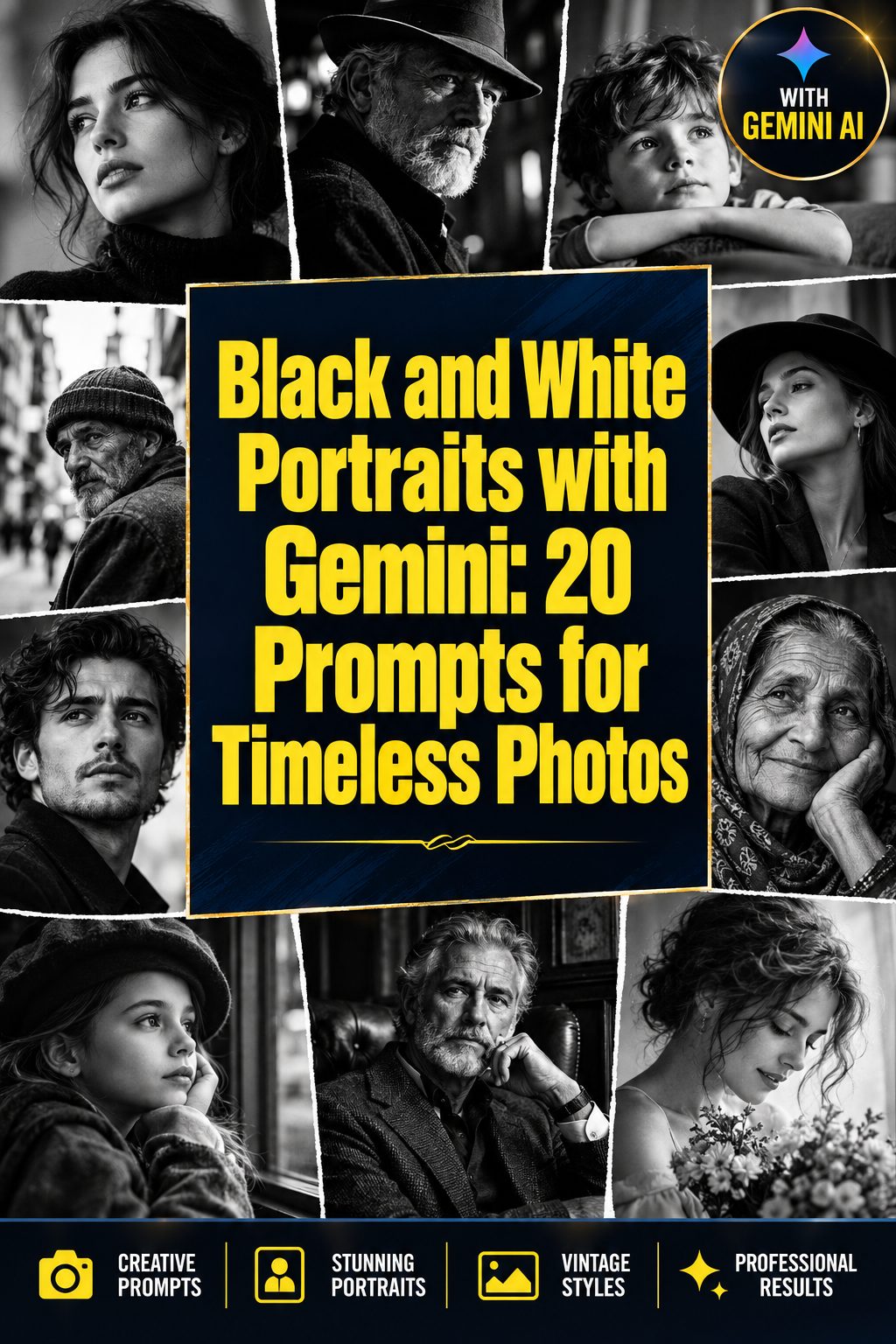
Why Black and White Portraits Work So Well with Gemini
Black and white photography is all about the relationship between light and shadow. When color is removed, the viewer naturally pays more attention to facial features, expressions, skin texture, and the way light falls across a subject. Gemini can help explore these visual elements through carefully written prompts that describe the intended photographic result.
Contrast creates drama. Strong contrast gives portraits a bold, striking appearance, while softer tonal transitions create a quieter and more intimate mood. You can use dramatic side lighting, controlled studio illumination, or gentle window light to produce different effects.
Texture adds realism. Fine film grain, natural skin details, visible pores, wrinkles, fabric fibers, and subtle imperfections can make a monochrome portrait feel more like a photograph taken with a real camera. These details are especially important when aiming for an authentic analog-film aesthetic.
Shadows tell a story. Dark backgrounds, partially illuminated faces, and carefully placed shadows can introduce mystery, depth, and emotion. Film-noir-inspired portraits are a particularly good example of how shadows can become an essential part of the composition.
Emotion becomes more noticeable. Without bright colors distracting the eye, small expressions can have a greater impact. A thoughtful gaze, a subtle smile, a tired expression, or a moment of quiet reflection can become the central feature of a portrait.
The style never goes out of fashion. Black and white portraits can feel vintage, contemporary, editorial, cinematic, or documentary depending on the lighting, styling, and composition. This versatility makes monochrome photography an excellent choice for experimenting with different visual moods using Gemini.
What Should You Include in a Black and White Portrait Prompt?
A strong Gemini prompt should explain not only who appears in the image but also how the photograph should look. The following checklist can help you create more consistent and realistic results.
- Lighting direction: Specify side lighting, window light, overhead light, backlighting, or soft frontal illumination to control how facial features are shaped.
- Contrast level: Choose deep blacks and bright highlights for a dramatic image or a wider range of soft grays for a gentle, understated portrait.
- Film grain: Describe fine 35mm grain, subtle analog noise, or pronounced vintage grain depending on the photographic style you want.
- Shadows: Explain where shadows should fall, whether across one side of the face, behind the subject, or along the background.
- Texture: Request realistic skin pores, fine lines, natural hair strands, detailed fabric, and believable photographic imperfections.
- Expression: Specify a calm gaze, thoughtful expression, confident stare, natural smile, or emotionally complex look.
- Background simplicity: Use a plain studio backdrop, a softly blurred street, a dark wall, or an uncluttered white background to keep attention on the subject.
- Classic versus modern styling: Choose vintage Hollywood glamour, timeless studio portraiture, contemporary fashion photography, or candid documentary realism.
20 Gemini Prompts for Black and White Portraits
The following prompts are designed for copy-and-paste use in Gemini. Each one explores a different monochrome photographic style, with specific instructions for lighting, tonal contrast, grain, texture, expression, and realistic camera details.
1. Dramatic Side-Lit Studio Portrait
Prompt:
Create an ultra-realistic black and white studio portrait of a person with a thoughtful, intense expression, photographed from the shoulders up. Use a single large softbox positioned at a 45-degree angle to illuminate one side of the face while allowing the opposite side to fall into deep, controlled shadow. Create rich tonal contrast, detailed highlights along the cheekbones, natural skin pores, fine facial lines, and realistic individual hair strands. Add subtle 35mm film grain and a gently textured dark gray background. Preserve smooth tonal transitions without losing shadow detail. Use an 85mm portrait lens, shallow depth of field, precise eye focus, and natural facial proportions. The final photograph should feel timeless, intimate, and professionally captured on monochrome film, with no color, artificial skin smoothing, or exaggerated retouching.
2. Mysterious Film-Noir Portrait
Prompt:
Create a cinematic black and white film-noir portrait of a person standing in a dimly lit room, looking slightly away from the camera with a guarded, mysterious expression. Use hard directional light entering through Venetian blinds, casting narrow bands of light and shadow across the face and background. Emphasize deep blacks, bright highlights, dramatic midtones, and a realistic falloff into darkness. Include subtle silver-grain texture, natural skin imperfections, detailed eyelashes, and believable reflections in the eyes. Keep the background dark and atmospheric, with a faintly visible wall texture. Simulate a classic 50mm film photograph with crisp facial detail and gentle optical softness toward the edges. The image should evoke vintage detective cinema while maintaining realistic anatomy, authentic photographic texture, and a strictly monochrome palette.
3. High-Contrast Fashion Editorial Portrait
Prompt:
Generate a high-end black and white fashion editorial portrait of a stylish adult model wearing a structured black outfit with clean architectural lines. Position the model against a simple charcoal studio background and use a focused beauty dish from slightly above eye level, creating sculpted cheekbones, defined jawlines, and controlled shadows beneath the chin. Apply bold tonal separation between the outfit, illuminated skin, and background while retaining realistic detail in dark fabrics. Include fine film grain, visible skin pores, individual hair strands, and natural expression lines. Give the model a confident, composed gaze and elegant posture. Simulate an 85mm lens at a wide aperture with sharp eyes and a gently blurred background. The result should resemble a premium magazine editorial shot on black and white film, with sophisticated contrast, realistic texture, and restrained retouching.
4. Soft Low-Key Portrait with Gentle Shadows
Prompt:
Create an intimate black and white portrait of a person with a peaceful, introspective expression, photographed in a quiet studio with a dark, uncluttered background. Use a large diffused light source positioned to one side and slightly above the subject, producing soft shadows that gradually blend into the darker side of the face. Keep the contrast moderate, with delicate highlights on the forehead, nose, and cheekbones and rich but detailed shadow areas. Preserve authentic skin texture, subtle under-eye lines, natural lips, and fine hair detail. Add very fine analog film grain and a soft, organic tonal quality without excessive blur. Simulate a 50mm lens, shallow depth of field, and careful focus on the eyes. The finished photograph should feel calm, emotionally honest, and naturally captured, with beautiful grayscale transitions and no color or plastic-looking skin.
5. Vintage 35mm Film-Grain Portrait
Prompt:
Produce a realistic vintage black and white portrait that looks as though it was photographed on an older 35mm film camera and carefully developed in a traditional darkroom. Show an adult subject with a relaxed, slightly nostalgic expression, natural posture, and understated clothing. Use soft window light from the left, creating gentle facial shadows and a luminous highlight across the eyes and cheekbones. Include visible but tasteful analog film grain, subtle tonal irregularities, realistic skin pores, fine hair detail, and delicate texture in the clothing. Use slightly softened highlights, rich midtones, and deep blacks that retain photographic detail. Simulate a classic 50mm lens with natural perspective and moderate depth of field. Avoid digital sharpness, artificial scratches, excessive vignetting, or exaggerated aging effects. The final image should feel authentic, timeless, and reminiscent of a carefully preserved archival portrait.
6. Candid Monochrome Street Portrait
Prompt:
Create a documentary-style black and white street portrait of a person standing on a busy city sidewalk, captured during a quiet moment between everyday activities. Give the subject a natural, observant expression and an unposed stance, with pedestrians and urban architecture softly blurred in the background. Use available overcast daylight from the side to create balanced facial illumination and realistic environmental shadows. Apply moderately strong contrast, detailed grayscale midtones, fine 35mm film grain, and authentic textures in the skin, hair, jacket, and surrounding pavement. Simulate a 35mm documentary photography lens with realistic perspective and a moderately shallow depth of field. Preserve small imperfections and spontaneous details instead of creating a polished studio appearance. The photograph should feel candid, human, and editorial, with genuine street-photography atmosphere and no color.
7. Elderly Hands and Character Study
Prompt:
Create an emotionally rich black and white character portrait of an elderly person with a wise, reflective expression and naturally weathered skin. Frame the subject from the chest up, with one hand gently resting near the chin so the hands and face both contribute to the story. Use soft directional window light from the side to emphasize wrinkles, fine lines, skin folds, and the intricate texture of the hands. Maintain rich contrast without crushing important details in the shadows. Include subtle film grain, realistic pores, age spots, individual eyebrow hairs, and visible fibers in a simple wool garment. Keep the background dark and understated. Simulate an 85mm portrait lens with crisp focus on the eyes and hands and a softly blurred background. The final image should resemble an honest documentary portrait on monochrome film, celebrating character, dignity, and the beauty of lived experience without artificial smoothing.
8. Dancer Captured in Motion
Prompt:
Generate a striking black and white fine-art portrait of a dancer captured during a graceful movement, with one arm extended and the body turned slightly away from the camera. Use directional studio lighting from above and to the side to define the shoulders, arms, facial structure, and flowing fabric. Create strong tonal contrast between the illuminated subject and a nearly black background while preserving texture in the darkest clothing. Show a focused, expressive face and realistic muscular definition without exaggeration. Include fine analog grain, natural skin texture, detailed fabric folds, and believable motion blur only along the moving hand or garment. Simulate a 50mm lens with a fast shutter speed that preserves the face sharply while allowing a small amount of controlled movement. The result should feel like an elegant professional dance photograph, with sculptural shadows, authentic anatomy, rich grayscale tones, and no color.
9. Rain-Soaked City Portrait
Prompt:
Create a cinematic black and white urban portrait of a person standing on a rain-soaked city street at night, with a reflective and slightly melancholic expression. Use a nearby streetlamp as the primary directional light, creating highlights on wet hair, water droplets, and the contours of the face. Let distant headlights and illuminated shop windows form soft, out-of-focus highlights behind the subject. Build deep blacks, luminous silvery highlights, and layered gray tones while retaining natural facial detail. Include realistic wet skin, individual damp hair strands, subtle 35mm film grain, textured clothing, and believable reflections on the pavement. Simulate an 85mm lens with shallow depth of field and sharp focus on the eyes. Avoid artificial rain overlays or exaggerated cinematic effects. The photograph should feel like a real monochrome film frame captured during a quiet, atmospheric moment in the city.
10. Classic Hollywood Glamour Portrait
Prompt:
Create an elegant black and white Hollywood-inspired glamour portrait of an adult subject with a poised expression, a graceful head angle, and a subtle, confident smile. Use classic studio beauty lighting with a soft key light above and to one side, gentle fill light, and a delicate rim light separating the hair from the background. Emphasize luminous highlights, sculpted cheekbones, expressive eyes, and smooth but realistic tonal transitions. Preserve natural skin pores, fine expression lines, detailed eyelashes, and individual hair strands. Add subtle fine-grain film texture and a softly graduated gray studio backdrop. Simulate an 85mm portrait lens with flattering perspective and crisp eye focus. Keep styling elegant and understated, inspired by traditional studio photography rather than exaggerated retro costume effects. The finished portrait should look sophisticated, authentic, and timeless, with rich monochrome tones and carefully controlled shadows.
11. Minimalist White-Background Portrait
Prompt:
Create a clean, minimalist black and white portrait of an adult subject against a seamless white studio background. Use broad, diffused frontal lighting with a subtle directional component from the upper left to preserve natural facial shape without producing harsh shadows. Maintain bright highlights, gentle midtone transitions, and carefully controlled contrast so the facial features remain clearly defined against the light background. Show a relaxed, authentic expression and natural posture. Include realistic skin pores, fine facial hair where appropriate, individual eyelashes, and delicate texture in the hair and clothing. Add extremely subtle film grain for a photographic finish without compromising the clean aesthetic. Simulate an 85mm lens with accurate facial proportions, sharp eyes, and a simple composition with generous negative space. The result should resemble a contemporary fine-art studio portrait, crisp and understated, with no color, artificial skin smoothing, or distracting props.
12. Window-Light Portrait in a Quiet Room
Prompt:
Produce a natural black and white portrait of a person sitting beside a large window in a quiet room, looking thoughtfully toward the light with a relaxed, contemplative expression. Let soft daylight enter from one side, creating gentle highlights along the face and smooth shadows across the opposite cheek. Include a faint suggestion of the window frame and a softly textured interior wall in the background. Use balanced contrast with delicate grayscale transitions, visible skin pores, fine hair detail, natural under-eye texture, and realistic fabric folds. Add fine analog film grain that enhances the photograph without making it look damaged or excessively vintage. Simulate a 50mm lens with shallow depth of field and accurate natural perspective. Keep the composition intimate and unposed, as if captured during a quiet afternoon on monochrome film. The final image should communicate warmth, stillness, and understated emotional depth.
13. Close-Up Portrait with Intense Eye Contact
Prompt:
Create an ultra-detailed black and white close-up portrait of an adult subject looking directly into the camera with a powerful, emotionally engaging expression. Frame the image tightly around the face, emphasizing the eyes, eyebrows, nose, lips, and natural facial contours. Use a large directional light source placed slightly above and to the side to create pronounced highlights and sculpted shadows. Maintain high contrast while retaining fine information in both the brightest skin areas and the darkest shadows. Show realistic pores, subtle blemishes, delicate facial lines, individual eyelashes, and natural catchlights in the eyes. Add restrained fine-grain monochrome film texture and avoid excessive sharpening or beauty retouching. Simulate a professional 85mm portrait lens with precise focus on the eyes and realistic optical depth. The result should feel intimate, honest, and editorial, with a strong human presence and a purely black and white tonal range.
14. Rainy Window Reflection Portrait
Prompt:
Create a poetic black and white portrait of a person sitting beside a rain-covered window, with a thoughtful expression and eyes focused on something outside the frame. Place the camera slightly to the side so faint window reflections and a few sharply defined water droplets appear in the foreground without obscuring the face. Use soft, directional daylight filtered through the cloudy glass to create gentle highlights and layered shadows across the subject’s features. Keep the contrast moderate, with rich charcoal tones, luminous highlights, and subtle midtone detail. Include fine 35mm film grain, natural skin texture, realistic hair strands, and visible fabric fibers. Simulate a 50mm lens with shallow depth of field and authentic optical reflections. The finished photograph should feel quiet, introspective, and cinematic, like an authentic analog photograph taken during a rainy afternoon, with no color or artificial visual effects.
15. Dark Background with Rim Lighting
Prompt:
Generate a dramatic black and white studio portrait of a person against a nearly black background, using a narrow rim light behind the subject to outline the shoulders, hair, and side of the face. Add a low-powered frontal fill light so the eyes and essential facial features remain visible without losing the moody atmosphere. Create deep blacks, luminous edge highlights, and rich midtones with carefully controlled tonal separation. Give the subject a serious, composed expression and a natural, slightly turned head position. Preserve realistic skin pores, small imperfections, individual hair strands, and detailed fabric texture. Add subtle analog grain and gentle photographic falloff toward the edges. Simulate an 85mm lens with sharp eye focus and a softly blurred background. The final portrait should feel sculptural and refined, like a professionally lit monochrome fine-art photograph, without artificial glow, excessive sharpening, or color.
16. Classic Profile Portrait
Prompt:
Create a timeless black and white profile portrait of an adult subject facing a soft light source positioned just beyond the edge of the frame. Compose the image from the shoulders up, clearly defining the forehead, nose, lips, chin, and jawline against a simple mid-gray background. Use directional side lighting to produce a luminous outline along the front of the face and a gradual transition into shadow behind the head. Keep the contrast elegant rather than harsh, with detailed highlights, soft midtones, and deep but readable shadows. Include realistic skin texture, delicate facial hairs, fine hair strands, and subtle 35mm film grain. Simulate an 85mm portrait lens with natural perspective, sharp focus along the facial profile, and a softly softened background. The image should resemble a classic fine-art studio photograph, emphasizing human form, authentic texture, and the enduring simplicity of monochrome portraiture.
17. Environmental Portrait in an Old Workshop
Prompt:
Create a realistic black and white environmental portrait of a craftsperson standing inside an old workshop, with a calm, experienced expression and a natural, slightly weathered appearance. Use light entering through a high side window to illuminate the face and hands while leaving tools, shelves, and workshop details in softer shadow. Establish moderate-to-high contrast while preserving texture in the dark work clothes, worn wooden surfaces, and metal tools. Include fine film grain, natural skin pores, realistic wrinkles, individual hair strands, and detailed fabric fibers. Keep the background softly focused but recognizable, creating a sense of place without distracting from the subject. Simulate a 35mm documentary lens with natural perspective and authentic ambient light. The final photograph should feel honest and observational, like a carefully composed monochrome documentary portrait that captures both personality and the character of the surrounding environment.
18. Contemporary Portrait with Geometric Shadows
Prompt:
Create a modern black and white editorial portrait of an adult subject standing against a simple studio wall, with a composed expression and confident posture. Use a hard directional light positioned to one side so geometric shadows from a window frame or architectural panel fall across the background and partially along the subject’s clothing. Keep the facial features clearly readable while creating strong contrast between bright highlights, middle grays, and deep shadow areas. Preserve natural skin pores, realistic hair detail, and the subtle texture of a structured outfit. Add restrained 35mm film grain and a slightly tactile photographic finish. Simulate a 50mm lens with controlled depth of field, sharp eyes, and believable shadow geometry. Avoid artificial graphic overlays or excessive retouching. The result should feel contemporary, architectural, and sophisticated, combining modern editorial composition with the timeless tonal depth of black and white photography.
19. Gentle Portrait with a Natural Smile
Prompt:
Create a warm, authentic black and white portrait of an adult subject with a natural, relaxed smile and bright, expressive eyes. Photograph the subject near a large window using soft daylight from the front and side, producing gentle highlights on the cheeks and subtle shadows beneath the nose and chin. Use moderate contrast and a wide range of delicate gray tones so the expression feels soft and inviting rather than overly dramatic. Preserve realistic smile lines, skin pores, natural teeth, individual eyelashes, and fine hair strands. Include subtle analog film grain and detailed texture in a simple, lightly textured background. Simulate an 85mm portrait lens with flattering perspective, natural depth of field, and crisp focus on the eyes. Avoid exaggerated smiles, artificial skin smoothing, and heavy retouching. The final photograph should feel spontaneous, emotionally genuine, and timeless, with the quiet charm of a beautifully captured monochrome portrait.
20. Fine-Art Portrait with Deep Shadows and Film Texture
Prompt:
Create a museum-quality black and white fine-art portrait of an adult subject with a serious, introspective expression, photographed against a dark, subtly textured background. Use a single directional light source positioned high and to one side to sculpt the face, reveal fine skin details, and create deep shadows beneath the cheekbones and jawline. Build a rich tonal range from luminous highlights to dense blacks, preserving realistic information in both bright and dark areas. Include delicate analog film grain, natural skin imperfections, subtle facial lines, detailed hair strands, and tactile clothing texture. Simulate a medium-format film photograph with excellent tonal depth, precise focus on the eyes, and a gently softened background. Keep the composition simple and emotionally expressive, avoiding artificial aging effects, excessive vignetting, or overly polished retouching. The final image should feel contemplative, sophisticated, and enduring, with authentic monochrome photographic character.
How to Customize These Prompts
The prompts above provide a strong starting point, but small adjustments can make each image feel more personal. Instead of changing every detail at once, focus on the elements that most influence the photographic result.
1. Adjust the lighting. Replace soft window light with hard studio light when you want more drama. Use a rim light for separation from a dark background, or broad diffused illumination for a gentler portrait. Lighting changes the mood even when the subject and composition remain the same.
2. Choose your contrast level. Add phrases such as “deep blacks and luminous highlights” for a bold editorial style. For a softer appearance, request “gentle tonal transitions, open shadows, and a wide range of mid-gray values.”
3. Control the film aesthetic. Specify fine 35mm grain for a subtle analog appearance, medium film grain for a vintage look, or a clean monochrome finish for contemporary studio photography. Grain should support the image rather than obscure important facial details.
4. Describe the expression precisely. A direct, confident gaze creates a different effect from a thoughtful sideways glance or a relaxed smile. Natural expressions generally help portraits feel more convincing than exaggerated emotions.
5. Refine the background. A black studio background emphasizes facial contours, while a pale seamless backdrop creates a clean editorial appearance. Environmental backgrounds introduce context and personality, especially in street or documentary photography.
6. Specify the framing. Ask for a tight close-up, shoulders-up portrait, half-body composition, or environmental portrait. Including the intended crop helps guide the relationship between the subject and the surrounding space.
7. Preserve natural details. Add instructions such as “retain authentic skin texture, natural facial proportions, and realistic hair strands” when an image looks overly smooth or artificial. Avoid requesting both extreme skin smoothing and highly realistic texture in the same prompt.
8. Refine one detail at a time. If the first result is close to your intended style, ask Gemini to adjust the contrast, soften the shadows, increase the film grain slightly, or simplify the background while preserving the subject’s appearance and composition.
Tips for More Realistic Black and White Portraits
Creating a convincing monochrome portrait requires more than applying a black and white filter. Realism comes from the relationship between lighting, skin texture, facial proportions, and the subtle imperfections associated with photography.
- Give the light a clear source. Specify where the light comes from and how it falls across the face. A defined light source produces more believable shadows than a vague instruction to make the image dramatic.
- Keep skin texture natural. Request visible pores, fine lines, and subtle imperfections. Avoid excessively smooth skin, which can make a portrait look like a digital illustration.
- Balance contrast with detail. Deep blacks can be beautiful, but completely featureless shadows may remove important information from the hair, clothing, and face. Ask for detailed shadow areas when realism matters.
- Use film grain carefully. Fine grain adds an analog character, while excessive grain can obscure facial details. Describe the grain as subtle, moderate, or pronounced according to the intended style.
- Keep the eyes believable. Natural catchlights, realistic eyelashes, and appropriate sharpness can make a major difference. Avoid exaggerated eye clarity or unnaturally bright whites.
- Choose a suitable lens description. An 85mm portrait lens suggests flattering facial perspective, a 50mm lens feels versatile and natural, and a 35mm lens works well for environmental and street portraits.
- Make the background support the subject. A simple background often helps facial expression and lighting stand out. Use background details only when they contribute to the story or atmosphere.
- Avoid contradictory instructions. A request for extremely harsh lighting and perfectly shadowless skin can produce inconsistent results. Decide whether the image should feel dramatic, soft, documentary, or editorial before refining the prompt.
- Inspect the hands and facial anatomy. When hands appear in the composition, check finger placement, joints, and proportions. Also examine the ears, teeth, hairline, and other details that can reveal image-generation imperfections.
- Use reference images thoughtfully. If Gemini supports image uploads in your workflow, a suitable reference can help communicate the desired lighting, composition, or film aesthetic. Make sure you have permission to use any reference photograph and avoid unintentionally copying another photographer’s distinctive work.
The most reliable approach is to begin with a clear photographic concept, generate an initial result, and then refine the details that matter most. A few focused adjustments usually provide more control than repeatedly rewriting the entire prompt.
Final Thoughts
Black and white portraits remain powerful because they reduce a photograph to its essential elements: light, shadow, expression, shape, and texture. Whether you prefer the intensity of film noir, the elegance of classic Hollywood photography, or the honesty of documentary portraits, monochrome gives you countless ways to communicate mood without relying on color.
These 20 Gemini prompts offer a starting point for exploring that versatility. Each prompt focuses on a distinct photographic approach, from dramatic studio lighting and vintage film grain to natural window light and atmospheric street photography. You can use them as written or adapt the lighting, expression, background, and contrast to match your creative vision.
For the most convincing results, focus on specific lighting instructions, believable skin texture, realistic facial details, and a balanced range of grayscale tones. Experiment with different styles, compare the results, and refine one element at a time. With thoughtful prompting, Gemini can help you explore monochrome portraits that feel expressive, sophisticated, and timeless.
Keep Exploring
- 25 Best Gemini Prompts for Cinematic Portraits
- 20 Best Gemini Prompts for Male Portraits
- 25 Best Gemini Photo Editing Prompts for Realistic Results
FAQs
1. Can Gemini create realistic black and white portraits?
Yes. Gemini can generate or help edit monochrome portraits when the available image features support the task. Detailed prompts describing lighting direction, contrast, skin texture, film grain, expression, and camera perspective can help guide the result toward a realistic photographic appearance.
2. How do I make Gemini portraits look like real black and white film photographs?
Specify an analog film style, subtle 35mm grain, natural skin imperfections, realistic highlights, detailed shadows, and believable lens characteristics. You can also describe the intended film mood, such as classic documentary photography or vintage studio portraiture, while avoiding excessive scratches and artificial aging effects.
3. Which lighting style works best for black and white portraits?
Side lighting is an excellent starting point because it reveals facial contours and creates depth. Soft window light works well for intimate portraits, hard directional light creates dramatic contrast, and rim lighting helps separate a subject from a dark background. The best choice depends on the mood you want to achieve.
4. How can I make monochrome portraits look less artificial?
Ask for realistic skin pores, natural facial proportions, subtle expression lines, individual hair strands, and controlled contrast. Use a clear light source, avoid excessive skin smoothing, and inspect details such as the eyes, hands, and teeth. Refining one specific problem at a time can also improve consistency.
5. Can I use these Gemini prompts with my own portrait photos?
Yes, if your Gemini interface supports uploading and editing images. Upload a photograph you have permission to use, then describe the desired monochrome treatment, including lighting, contrast, grain, and tonal range. If you want to preserve the person’s appearance, explicitly request that facial identity, natural proportions, and recognizable features remain unchanged while the photographic style is adjusted.
Leave a Reply